



“You Can’t Own the Alphabet: Delhi HC Says No to ‘A TO Z’ Monopoly”
Background
Alkem Laboratories Ltd. instituted a suit before the Delhi High Court against Prevego Healthcare and Research Pvt. Ltd., alleging trademark infringement, copyright infringement, passing off, and allied reliefs. Alkem asserted rights in its marks ATOZ-NS, 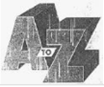 , copyright in its stylised logo
  , and its distinctive trade dress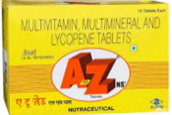
 , and sought to restrain the Defendant from using any deceptively similar mark or trade dress.
The Defendant markets pharmaceutical tablets under the mark MULTIVEIN AZ  . At the admission stage, the Court granted an ex parte injunction in favour of Alkem. Prevego subsequently filed an application seeking vacation of the injunction. The present note analyses the rival contentions and the Court’s findings while deciding the application.
Plaintiff’s Case
Alkem, founded in 1973, is a leading pharmaceutical company with operations spanning research and development, manufacturing, marketing, and sales in India and overseas. It holds significant market presence across gastrointestinal, nutraceutical, pain management, anti-infective, and anti-osteoporosis segments.
The Plaintiff contended that:
- The trademarks “A TO Z” (adopted in 1998) and “A TO Z-NS” (adopted in 2008) are coined and arbitrary marks which have been used continuously and extensively, thereby acquiring distinctiveness and exclusive association with Alkem.
- “A TO Z” constitutes the essential and dominant feature of its trademark portfolio.
- Its logo, comprising stylised letters “A” and “Z” with “TO” depicted separately in a different colour, is a distinctive artistic work protected by copyright and has been in continuous use since 1998.
- In December 2024, Alkem discovered that the Defendant was using a deceptively similar mark and trade dress for identical pharmaceutical products.
- The Defendant’s use of MULTIVEIN AZ was likely to cause consumer confusion and false association, amounting to passing off and unfair exploitation of Alkem’s goodwill.
- The absence of a standalone word mark registration for “A TO Z” did not negate its rights, as the mark had acquired secondary meaning through long and uninterrupted use.
- Alleged third-party use of “A TO Z” was either abandoned, unrelated, or unsupported by genuine use.
Accordingly, Alkem sought confirmation of the interim injunction.
Defendant’s Case
Prevego sought vacation of the injunction, contending that:
- It is the lawful proprietor of the mark “MULTIVEIN”, honestly adopted in August 2020, and has used the mark openly, continuously, and exclusively for nutraceutical products.
- MULTIVEIN is a coined and novel mark that has gained market recognition and confers statutory and common law rights.
- The Plaintiff’s marks are device marks registered only in Classes 29 and 30, and any claim over Class 5 products amounts to impermissible expansion of statutory rights.
- The addition of “Multivein” and the absence of “TO” materially alter the structure, sound, and overall commercial impression of the Defendant’s mark.
- “AZ” is commonly used in the pharmaceutical industry, and the Plaintiff holds no standalone registration for “A TO Z” in Class 5.
- There is no copyright infringement, as copyright does not subsist in ordinary English letters or generic expressions.
- The Defendant’s trade dress is visually distinct, featuring a flowing ribbon-like design as opposed to the Plaintiff’s boxy layout with a three-dimensional logo.
- Documents on record demonstrate that “A TO Z” is generic and common to the trade.
Court’s Analysis and Findings
The Court examined the rival submissions and held as follows:
- Descriptive Nature of “A TO Z”: The Court held that “A TO Z” denotes completeness and, in the context of nutraceuticals and multivitamins, is descriptive of the nature of the goods. Consequently, the mark is incapable of monopoly, particularly as the Plaintiff cannot claim exclusivity over the letters “A” and “Z”. This conclusion was reinforced by the Plaintiff’s admission before the Trademarks Registry that protection was limited to its specific stylised device mark.
- Application of Anti-Dissection Rule: Reiterating settled law, the Court applied the anti-dissection rule and held that device marks must be compared as a whole. Registration of a device mark does not confer exclusivity over its word elements.
- No Deceptive Similarity: Applying the test of deceptive similarity, the Court found that the rival marks, when viewed as composite marks in their entirety, were visually and phonetically distinct. The addition of “Multivein” and the differing colour schemes negated any likelihood of confusion.
- No Copyright Infringement: The Court held that copyright in a stylised artistic label does not grant exclusivity over the letters “A” and “Z” in all forms. Given the material differences in stylisation, colour, and overall presentation, no copyright infringement was made out.
- Trade Dress Claims Rejected: The Court found that the Defendant’s trade dress was not deceptively similar to the Plaintiff’s, as the overall visual impression, including layout, fonts, and colour schemes was clearly distinct.
Conclusion
In light of the above findings, the Delhi High Court held that no prima facie case was made out for continuation of the injunction and accordingly dismissed the Plaintiff’s application.
The decision reinforces key principles of trademark law: descriptive expressions indicating completeness cannot be monopolised; device marks must be assessed as a whole under the anti-dissection rule; and registration of a device mark does not grant exclusivity over its word elements. By refusing to extend injunctive relief in the absence of deceptive similarity or consumer confusion, the Court reaffirmed the balance between trademark protection and fair competition in the pharmaceutical and nutraceutical sector.