



Addition of prefix or suffix do not Sanitize Infringement; Delhi High Court orders cancellation of “AiC ARUN”
The dispute over the registration of the trademark “AiC ARUN”, in Satya Paul v. Alka Industrial Corporation & Anr., [C.O. (COMM.IPD-TM) 651/2022] unfolded as a classic battle between long standing use of ARUN mark versus a later entrant attempting to justify subsequent adoption by adding a prefix to the mark ARUN. This case lays a simple but critical question Could addition of a prefix truly overshadow a well established trademark? The judgment provides important clarity on how Indian Courts view deceptive similarity, prior rights, dominant features and the limits of modifying an established mark through superficial additions.
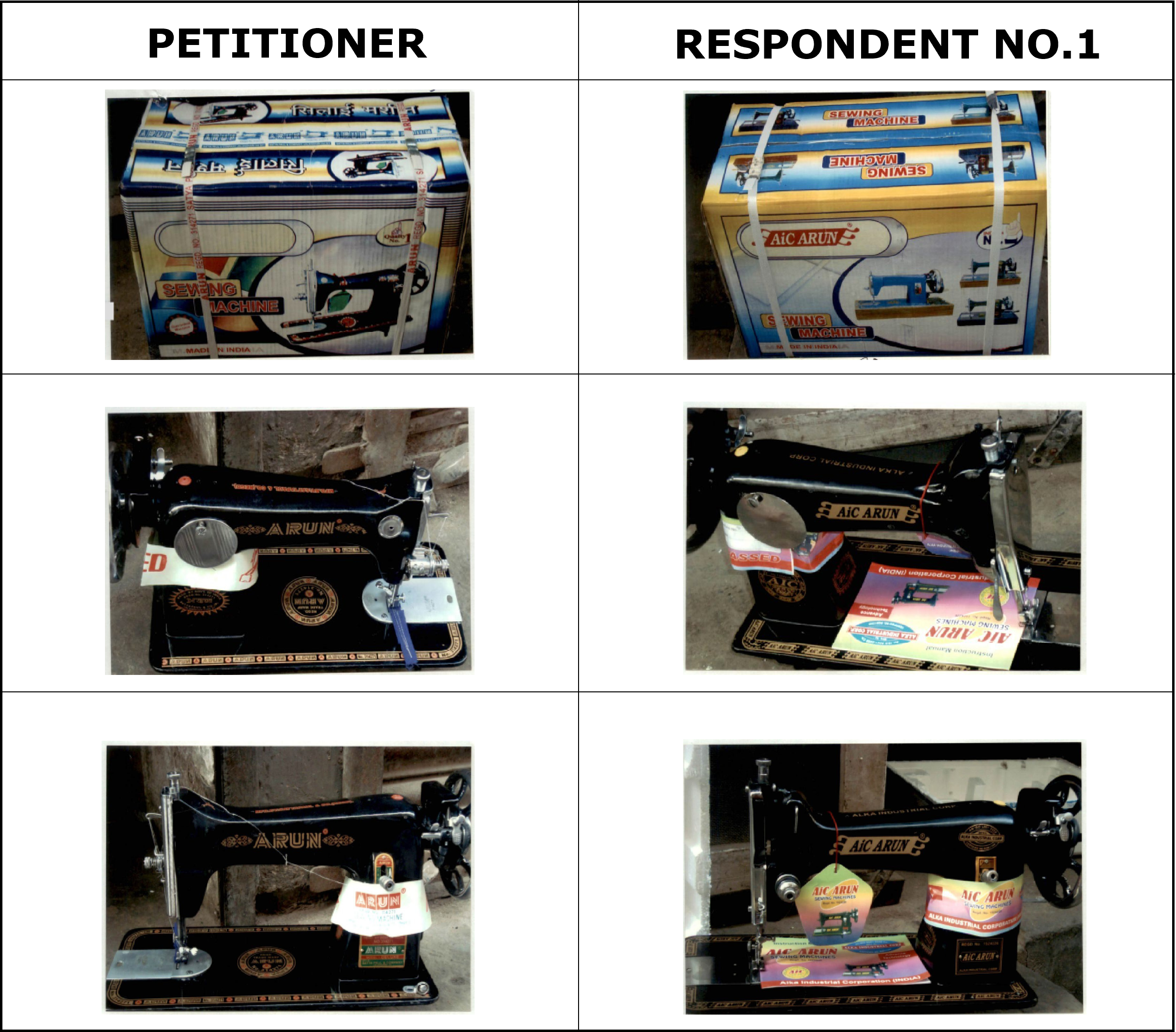
Representation of the Competing Marks/Products
 Background of the Case:
- The Petitioner, Satya Paul, filed this cancellation action claiming longstanding and prior rights in the trademark “ARUN” which was adopted by its predecessor-in-interest in 1962 in respect of sewing machines and allied goods. The Petitioner relied on multiple trademark registrations upon covering different regions and classes to demonstrate statutory as well as common law rights.
- The Respondent, Alka Industrial Corporation, had obtained registration for the mark “AiC ARUN”, arguing that the prefix “AiC” represented the initials of its corporate name.
- The Petitioner challenged this registration before the Delhi High Court (IPD), arguing that the dominant and essential feature of the Respondent’s mark was “ARUN”, which was identical to its prior registered mark and would cause confusion and deception.
- The core issue before the Court was whether adding the prefix “AiC” was enough to distinguish the Respondent’s mark from the Petitioner’s long established “ARUN” trademark.
Petitioner’s Contentions:
- Prior and Continuous Use: The Petitioner is the prior adopter and user of the trademark “ARUN”, first adopted by its predecessor in interest in 1962 for sewing machines and allied goods and has been used by it continuously for several decades.
- Multiple Statutory Registrations: The Petitioner holds multiple trademark registrations for the mark “ARUN” across different classes and geographical regions, strengthening its statutory rights.
- Reputation, Goodwill and Acquired Distinctiveness: Through extensive use, marketing, and sale of sewing machines, the mark “ARUN” has acquired substantial reputation, goodwill and distinctiveness in the trade.
- Deceptive Similarity and Overall Imitation: The Respondent’s trademark “AiC ARUN” is phonetically and deceptively similar, with “ARUN” remaining the dominant and essential element. A bare comparison of the marks, labels, and packaging of the sewing machines show clear imitation, strengthening the grounds for revocation.
- Prefix “AiC” Does Not Avoid Confusion: The Petitioner contended that mere addition of the prefix “AiC” does not mitigate the ambit of “deceptive similarity” since consumers primarily identify the mark through the essential element “ARUN”.
- Triple Test for Likelihood of Confusion Satisfied:
- Deceptive Similarity: The competing marks share the primary and distinctive component “ARUN”.
- Identical/similar Class of Goods: Both parties manufacture sewing machines and parts, falling under identical/closely related classes.
- Common/Identical Consumer Base and Trade Channels: The consumers, traders, and commercial channels are identical, increasing the likelihood of confusion. The Petitioner asserted that the Respondent’s mark is likely to deceive or confuse the purchasing public, warranting cancellation.
- Overlapping Geographical Area of Sales: The Petitioner asserted that both parties operate and market their sewing machines within the same geographical regions, resulting in a direct overlap of trade territories.
Respondent’s Contentions:
- No Deceptive Similarity Between the Marks: Respondent No. 1 argued that a bare comparison of the two trademarks, labels, trade dress, and packaging shows that the marks “ARUN” and “AiC ARUN” are completely distinct and not deceptively similar. They contended that although the consumer base and goods may be similar, that alone cannot entitle the Petitioner to seek revocation.
- Prefix “AiC” Creates Clear Distinction: Respondent No. 1 argued that the prefix “AiC” (standing for Alka Industrial Corporation) is a prominent distinguishing element, making the two marks entirely different.
- “ARUN” is a Common, Generic and Publici Juris Name: Respondent No. 1 contended that the name/mark “ARUN” is common and generic, widely used by several manufacturers for the same goods i.e., sewing machines and cannot be monopolized by the Petitioner.
- Lawful and Unopposed Registration for “AiC ARUN”: Respondent No. 1 submitted that that its trademark application underwent regular statutory processes. The Petitioner did not file any opposition within the statutory period of 4 months. Consequently, having failed to oppose at the appropriate stage, the Petitioner cannot now seek cancellation of the registered mark.
- Honest and Bonafide Adoption and Use: Respondent No. 1 argued that they had honestly adopted the mark “AiC ARUN” and is a bonafide user, with user being more than 3 months prior to their application date.
- Marks, Labels, Packaging and Trade Dress Are Distinct: Respondent No. 1 relied upon a detailed comparative chart highlighting:
- Different prefixes
- Different fonts / styles
- Different colour schemes
- Different wrappers and packaging
- ISO certification appearing only on Respondent’s products
- Distinct manufacturer names
It argued that these differences eliminate any likelihood of confusion.
- No Commercial Harm to Petitioner: Respondent No. 1 argued that its business is a small enterprise compared to the Petitioner’s. It submitted that a comparison of sales figures from FY 2007-08 to 2024-25 show that Petitioner’s sales have steadily increased, proving that its mark did not impact the Petitioner’s business.
Court’s Ruling and Observations:
- Prior Adoption and Longstanding Use Established: The Court held that the Petitioner had placed on record overwhelming documentary evidence proving that the Petitioner was established in 1960 and the trademark “ARUN” was coined, adopted, and used since 1962 through its predecessor in interest. The Court noted several trademark registrations dating back to 1976, 1984 and 2001, which clearly showed prior statutory rights.
- Geographic Proximity Supported Likelihood of Confusion: The Court noted that both parties were operating in close proximity i.e., the Petitioner in Jalandhar and Respondent No. 1 in Ludhiana, both in the State of Punjab, enhancing the probability of confusion among consumers.
- Deceptive Similarity Between “ARUN” and “AiC ARUN” Established: The Court found that the impugned mark “AiC ARUN” retained “ARUN” as its dominant and essential feature, making the addition of the prefix “AiC” insufficient to avoid deception. The “triple test” for deceptive similarity was satisfied.
- Respondent’s Argument That “ARUN” Is Generic Rejected: The Court rejected the Respondent’s claim that “ARUN” is generic or publici juris. The Court emphasized that the Petitioner had demonstrated long, exclusive, and widespread use and had successfully enforced its rights in the past, proving distinctiveness in the sewing machine trade.
- No Bona Fide Adoption: The Court held that the Respondent adopted “AiC ARUN” with knowledge of the Petitioner’s established reputation, evidencing mala fides.
- Failure to Oppose Not a Bar: The Court clarified that the Petitioner’s failure to oppose the Respondent’s mark at the publication stage does not bar rectification proceedings. Statutory remedies remain available where prior rights and deceptive similarity are clearly established.
- Evidence Shows Clear Possibility of Consumer Confusion: Comparing the trade dress, and sales channels, the Court found significant similarity and concluded that consumers were likely to be misled.
- Court’s Final Decision – Rectification Ordered: The Court directed rectification of the Respondent’s mark “AiC ARUN”, specifically ordering the deletion of the word “ARUN” from Respondent No. 1’s trademark, given its deceptive similarity and the Petitioner’s established prior rights.
Our Comment:
The key learnings from this decision
- A plea of “common to trade” or publici juris must be supported by solid market evidence, not assertions alone. Long-standing exclusive use can overcome even arguably descriptive names.
- Minor additions, whether prefix or suffix, do not sanitize infringement when the core of the registered mark is copied.
- There is no permanent estoppel merely due to non-filing of opposition. A party may still seek cancellation/rectification even if it missed the opposition window.