



No Shortcut Through Registration: Delhi HC Upholds Limitation in ‘DIGESTO’ Dispute”
The Delhi High Court, in a recent judgment of its Division Bench, considered the interplay between prior use, descriptive marks, third-party use, deceptive similarity, and limitation in a passing-off dispute concerning the marks HASLAB’S DIGESTO and DIGESTO PLUS.
The appeal was preferred by Hahnemann Scientific Laboratory India Pvt. Ltd. against the order of the District Judge (Commercial Court)-01, Patiala House Courts, New Delhi, which had declined to continue an interim injunction against Meera Rastogi trading as Hahnemann Memorial Laboratory.
The Division Bench dismissed the appeal, principally on the ground of limitation, while also finding no infirmity in the Trial Court’s assessment of prior use, deceptive similarity, balance of convenience and irreparable injury.
Background
The Plaintiff is engaged in the manufacture, marketing and sale of homoeopathic medicines and preparations. Its group concern, M/s Hahnemann Scientific Laboratory (India), claimed to have bona fide adopted and commenced use of the trademark HASLAB’S DIGESTO in 1971.
The mark was subsequently registered in Class 5 in 1986, claiming use since 1971. However, the registration expired in 1993 and was not renewed.
The Defendant was also engaged in the manufacture and sale of homoeopathic medicines and used the mark DIGESTO PLUS. Its application for the mark in Class 5 was pending.
The Plaintiff claimed that it became aware of the Defendant’s use of DIGESTO PLUS only in May 2024 and thereafter instituted a suit for passing off. The Trial Court initially granted an ex parte ad-interim injunction and appointed a Local Commissioner.
After the Defendant entered appearance and filed its written statement, the Trial Court reconsidered the matter and set aside the injunction. It found, inter alia, that the Plaintiff had failed to establish misrepresentation or likelihood of deception.
The Plaintiff’s Case
Before the Division Bench, the Plaintiff contended that it was the prior adopter and user of HASLAB’S DIGESTO since 1971 and that the Trial Court had erred in questioning its claim merely because documentary evidence of continuous use between 1981 and 2007 was unavailable.
It argued that the Defendant’s mark DIGESTO PLUS was deceptively similar to HASLAB’S DIGESTO, since both products were pharmaceutical preparations sold through similar trade channels to the same class of consumers.
The Plaintiff further contended that “DIGESTO” was suggestive rather than descriptive and that the Trial Court had wrongly treated the expression as publici juris. According to the Plaintiff, mere third-party registrations or search results could not establish actual market use of the term.
The Plaintiff also relied upon its fresh registration for HASLAB’S DIGESTO, granted in March 2026, claiming use since 1971. An application was thereafter filed seeking amendment of the plaint to incorporate the subsequent registration.
The Defendant’s Submissions
The Defendant opposed the appeal on both limitation and merits.
It contended that the appeal had been filed 76 days beyond the prescribed period and that no sufficient cause had been shown for condoning the delay.
On merits, the Defendant submitted that the suit was essentially one for passing off, as the Plaintiff had no subsisting registration when the Trial Court passed the impugned order. The subsequent registration could not retrospectively convert the dispute into an infringement action.
The Defendant relied upon documentary evidence demonstrating use of DIGESTO PLUS since 1980, including invoices and regulatory documents.
It was argued that the Plaintiff’s claimed user date of 1971, appearing in its trademark applications, was merely an assertion unsupported by evidence of continuous commercial use, sales, goodwill or reputation.
The Defendant further relied upon the fact that, during registration of the Plaintiff’s earlier mark, the Plaintiff had accepted a disclaimer in respect of the word “DIGESTO”.
Prior Use: 1971 Claim Not Established
The Division Bench found no reason to interfere with the Trial Court’s finding that the Plaintiff had failed to establish continuous commercial use of HASLAB’S DIGESTO between 1981 and 2007.
Although the Plaintiff claimed use since 1971, the earliest sales invoice produced before the Court was from 2007. The Bench noted that the Plaintiff could not identify any documentary material contradicting the Trial Court’s finding.
In contrast, the Defendant had produced material indicating use of DIGESTO PLUS since at least 1980.
Thus, at the interlocutory stage, the Defendant had succeeded in establishing a stronger case regarding prior use, while the Plaintiff’s claim of use since 1971 remained unsupported by evidence.
Is “DIGESTO” Descriptive and Common to the Trade?
The Plaintiff argued that DIGESTO was suggestive and capable of distinguishing its pharmaceutical products. The Division Bench, however, found merit in the Trial Court’s assessment that the expression was common to the trade in relation to digestive preparations.
Particular importance was attached to the 1986 disclaimer. When the Plaintiff’s earlier registration was granted, the Registrar had required a disclaimer in respect of the word DIGESTO. The Plaintiff had not disclosed the circumstances leading to the disclaimer or placed the relevant prosecution history before the Court.
The Court observed that the circumstances and effect of the disclaimer would require examination at trial. Nevertheless, the fact that the Registrar had required the disclaimer in 1986 indicated that DIGESTO was considered common to the trade, and that exclusivity over the expression was not intended to be conferred upon the Plaintiff.
The Defendant had also produced search material showing third-party use and applications involving DIGESTO-formative marks dating back several decades, including an application for the word DIGESTO itself as early as 1946.
These circumstances justified the Trial Court’s prima facie conclusion that DIGESTO was common to the trade in relation to digestive medicines.
The Fresh Registration Did Not Confer Monopoly Over “DIGESTO”
The Plaintiff sought to rely upon its subsequent registration, to contend that the earlier findings concerning the descriptive nature of DIGESTO had effectively been superseded.
The Division Bench rejected this contention.
The Court pointed out that the subsequent registration was for the composite mark HASLAB’S DIGESTO, and not for the solitary word DIGESTO. Therefore, the registration did not, by itself, establish exclusive rights over the word DIGESTO.
The Court also left open for trial the question whether the Registrar, while granting the later registration, had been aware of the disclaimer in the earlier registration and had consciously chosen not to impose a similar limitation. The documents relied upon by the Registrar in accepting the claimed user date since 1971 would require examination.
Deceptive Similarity: Marks Must Be Compared as a Whole
On the issue of deceptive similarity, the Division Bench reiterated the settled principle that rival marks must be assessed as a whole, having regard to their overall visual, phonetic and conceptual impression.
Applying this test, the Court found no infirmity in the Trial Court’s conclusion that HASLAB’S DIGESTO  and DIGESTO PLUS
 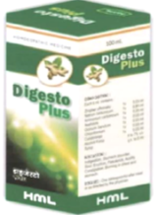 were not deceptively similar.
The respective trade dresses were also found to be distinct.
The Court further held that the mere presence of the common and descriptive expression DIGESTO in both marks could not, by itself, justify a finding of deceptive similarity.
Thus, notwithstanding the fact that both parties operated in the pharmaceutical field, the overall comparison did not disclose a likelihood of confusion sufficient to warrant an interim injunction.
Balance of Convenience and Irreparable Injury
The Court also upheld the Trial Court’s findings on balance of convenience and irreparable injury.
Since the Defendant had prima facie established use of DIGESTO PLUS since 1980, while the Plaintiff could not establish use since its claimed date of 1971, the balance of convenience favoured the Defendant.
Granting an injunction would prevent the Defendant from continuing a mark which, on the material available at the interlocutory stage, it had been using for several decades.
The Court also noted that the Plaintiff’s assertion that it became aware of the Defendant’s use only in 2024 raised questions requiring examination at trial.
Limitation: The Subsequent Registration Could Not Revive a Time-Barred Appeal
The appeal met its most significant obstacle on limitation.
The statutory period for filing the appeal had lapsed and it was instituted with a delay of 76 days.
The Plaintiff relied principally upon the subsequent grant of registration as the explanation for the delay.
The Division Bench held that the subsequent registration, by itself, could not constitute “sufficient cause” for condoning the delay.
The Court clarified that the subsequent registration could not be used to overcome the limitation bar or to seek reconsideration of an order which had already been passed on the basis of the Plaintiff’s passing-off claim.
Key Takeaways
- Prior use must be proved by credible evidence; a claimed user date alone is insufficient.
- Descriptive elements cannot readily be monopolised, particularly where third-party use and historical records establish their common nature.
- Deceptive similarity is assessed by the overall impression of the rival marks, not by isolating a common descriptive element.
- Limitation remains critical in commercial appeals: a later trademark registration does not automatically justify condonation of delay or reopen a decision that has attained finality.