



A Registered Trademark Doesn’t Mean You Own Every Word in It: Kerala High Court on “MALABAR”
Background
The dispute arose from a suit filed by Malabar Gold Private Ltd. against M. Manuel, proprietor of “Malabar Fashion Jewellery,” before the Additional District Judge-II, Kozhikode, alleging trademark infringement, copyright infringement, passing off, and related reliefs.
The plaintiff claimed exclusive rights over the registered trademark “MALABAR GOLD” and its logo 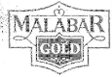 in Class 14, asserting long and extensive use since 1993.
The defendant contended that it had been using “Malabar Fashion Jewellery”  since 1990, argued that “Malabar” is a geographical term incapable of exclusive appropriation, denied any likelihood of confusion, and also pleaded delay and acquiescence.
The District Court decreed the suit in favour of the plaintiff, holding that the defendant’s mark was deceptively similar and constituted both infringement and passing off. Aggrieved by the decree, the defendant preferred an appeal before the Kerala High Court.
Contentions before the High Court
Before the High Court, the defendant mounted a multi-pronged challenge to the judgment of the District Court.
- The defendant argued that the plaintiff had failed to establish its ownership of the registered trademark, as the registration stood in the name of Malabar Realtors (P) Ltd., whereas the suit was filed by Malabar Gold Private Ltd. In the absence of evidence establishing the relationship between the two entities or a valid assignment of the trademark, the plaintiff could not claim statutory rights over the mark.
- The defendant contended that the plaintiff’s business fell under Class 35 (retail services) rather than Class 14 (jewellery goods) and argued that, as both parties held valid trademark registrations in different classes, no injunction for trademark infringement could be granted against the defendant.
- The defendant also challenged the District Court’s jurisdiction, contending that issues relating to trademark classification and validity fall exclusively within the jurisdiction of the Registrar of Trademarks and the authorities under the Trademarks Act.
- The defendant argued that the passing off claim was unsustainable as the plaintiff had failed to prove goodwill, prior user and damage, and could not claim exclusive rights over the geographical word “Malabar” without establishing that it had acquired a secondary meaning.
- The plaintiff contended that the defendant had admitted carrying on jewellery business under Class 14 and therefore could not rely on its Class 35 registration as a defence to the infringement claim.
- The plaintiff argued that the defendant had dishonestly adopted a deceptively similar mark to capitalize on its goodwill, that its trademark registration remained valid and unchallenged, and that the plea of delay was untenable since the issuance of a caution notice ruled out any acquiescence.
The High Court’s Analysis
Registration in Different Classes
The High Court held that although the defendant held a Class 35 registration, it was actually dealing in Class 14 goods. As the plaintiff’s Class 14 registration remained valid and unchallenged, the defendant could not rely on its Class 35 registration to defend the infringement claim.
Civil Court’s Jurisdiction
The High Court held that the District court had jurisdiction to decide the infringement suit since the defendant had neither challenged the validity of the plaintiff’s trademark registration nor raised any statutory defence requiring reference to the Registrar.
Geographical Expressions and Composite Marks
The High Court held that while “Malabar” is a geographical term incapable of exclusive appropriation in isolation, the plaintiff’s composite trademark was entitled to protection. Assessing the rival marks as a whole, the Court found them deceptively similar in their overall trade dress, logo, lettering, colour scheme and commercial impression, making consumer confusion likely.
Passing Off and Proof of Goodwill
The High Court held that while the plaintiff had established prior and continuous use of the mark, a passing off action requires independent proof of goodwill, misrepresentation, and damage. As the plaintiff failed to produce sufficient independent evidence of goodwill before the District Court, the finding of passing off was set aside.
Delay Does Not Constitute Acquiescence
The defendant also relied upon the plaintiff’s delay in instituting proceedings. Rejecting this submission, the High Court reaffirmed the settled principle that mere delay does not amount to acquiescence. Unless there is clear evidence demonstrating intentional waiver, encouragement or consent by the proprietor, delay alone cannot defeat statutory trademark rights. The issuance of a caution notice by the plaintiff further negatived any inference of abandonment.
Conclusion
The Kerala High Court partly modified the decree passed by the District Court. While affirming the findings relating to deceptive similarity, prior user and trademark infringement, it clarified that the plaintiff could not claim an exclusive monopoly over the geographical word “MALABAR” in isolation. The injunction was therefore modified to restrain the defendant only from using any mark, logo, trade dress or overall commercial presentation that was identical or deceptively similar to the plaintiff’s composite mark and likely to cause consumer confusion.
Comment
The judgment serves as a reminder that trademark registration does not automatically confer exclusive rights over every constituent element of a composite mark, particularly where such element is geographical in nature. Equally significant is the Court’s reiteration that while infringement is primarily a statutory remedy flowing from registration, a successful passing off action continues to depend upon strict proof of goodwill, misrepresentation and damage. The decision provides valuable guidance on balancing statutory trademark protection with the public interest in preserving the availability of descriptive and geographical expressions for honest commercial use.