



Relaxo vs Aqualite: Strengthening Design Enforcement in India
Design protection is crucial for businesses that rely on unique product appearances to differentiate themselves from the competitor’s product. The dispute between Relaxo Footwears Ltd. (Relaxo) and Aqualite Industries Pvt. Ltd. (Aqualite) over flip flop slippers (known as ‘hawai slippers’ in India) provides a clear guidance on novelty, prior art and aesthetic appeal of a product required to seek an interim injunction.
Background
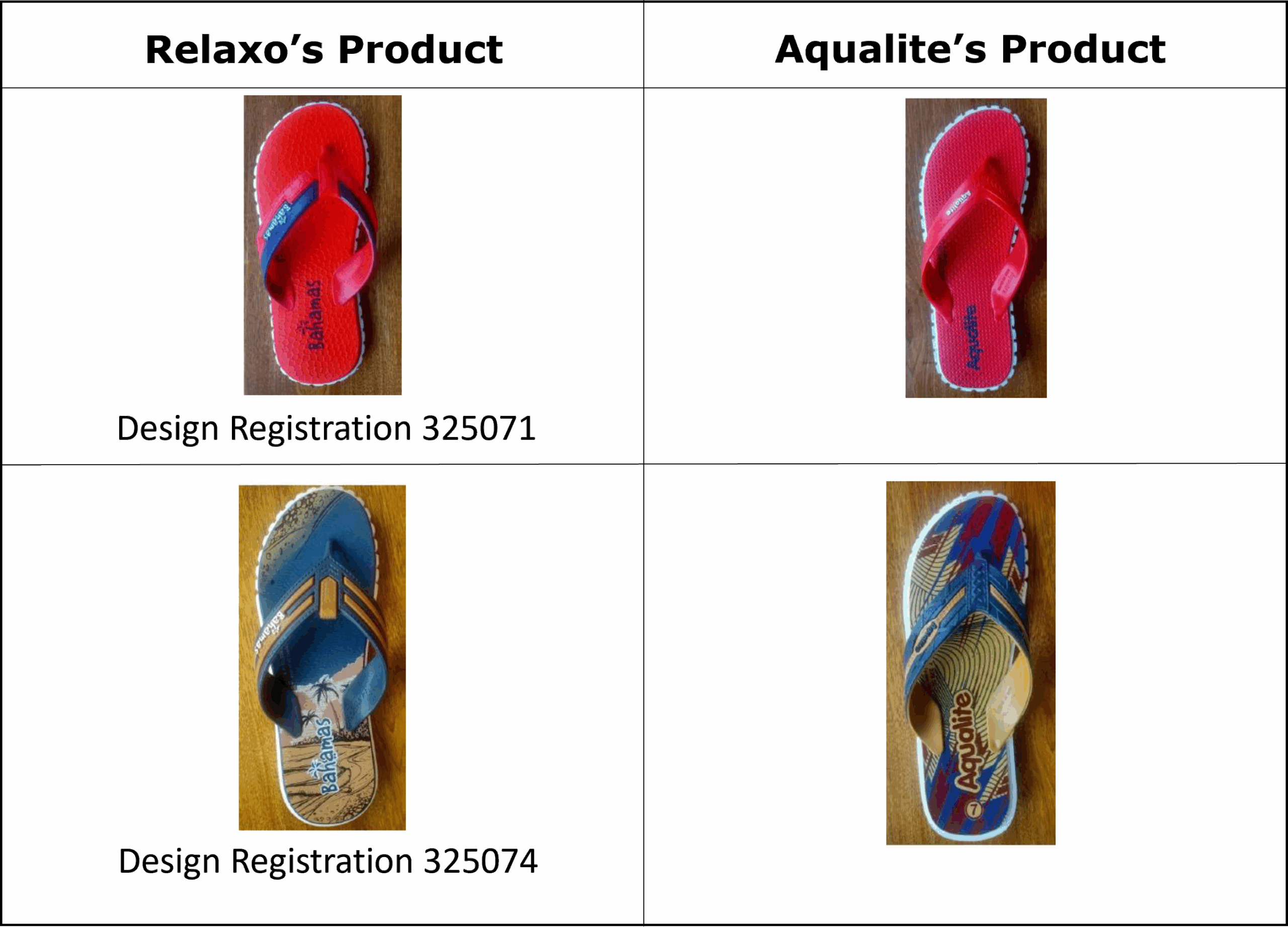
- Relaxo’s owns two designs for slipper models (BHG 136 and BHG 137), featuring vertical ridges on the sides, which are claimed to be a novel visual element.
- Relaxo alleged that Aqualite was manufacturing and selling slippers that were visually similar, thus infringing their registered designs.
- Relaxo filed a suit seeking a permanent injunction and an interim injunction was granted by the Single Judge of the High Court, restraining Aqualite from dealing in infringing footwear pending the suit’s outcome.
- Aqualite appealed against this interim injunction to the two judges’ bench (Division Bench). The product images are appended below.
This article discusses the Appeal filed by Aqualite against the injunction Order.
Aqualite’ contentions
- Lack of Novelty in Relaxo’s Registered Designs
- that the registered designs (of models BHG 136 and BHG 137) lacked novelty, a key requirement under the Designs Act, 2000.
- They claimed that the vertical side ridges, which Relaxo asserted as the novel feature, were already present in prior art and in other footwear available in the market before Relaxo’s registration.
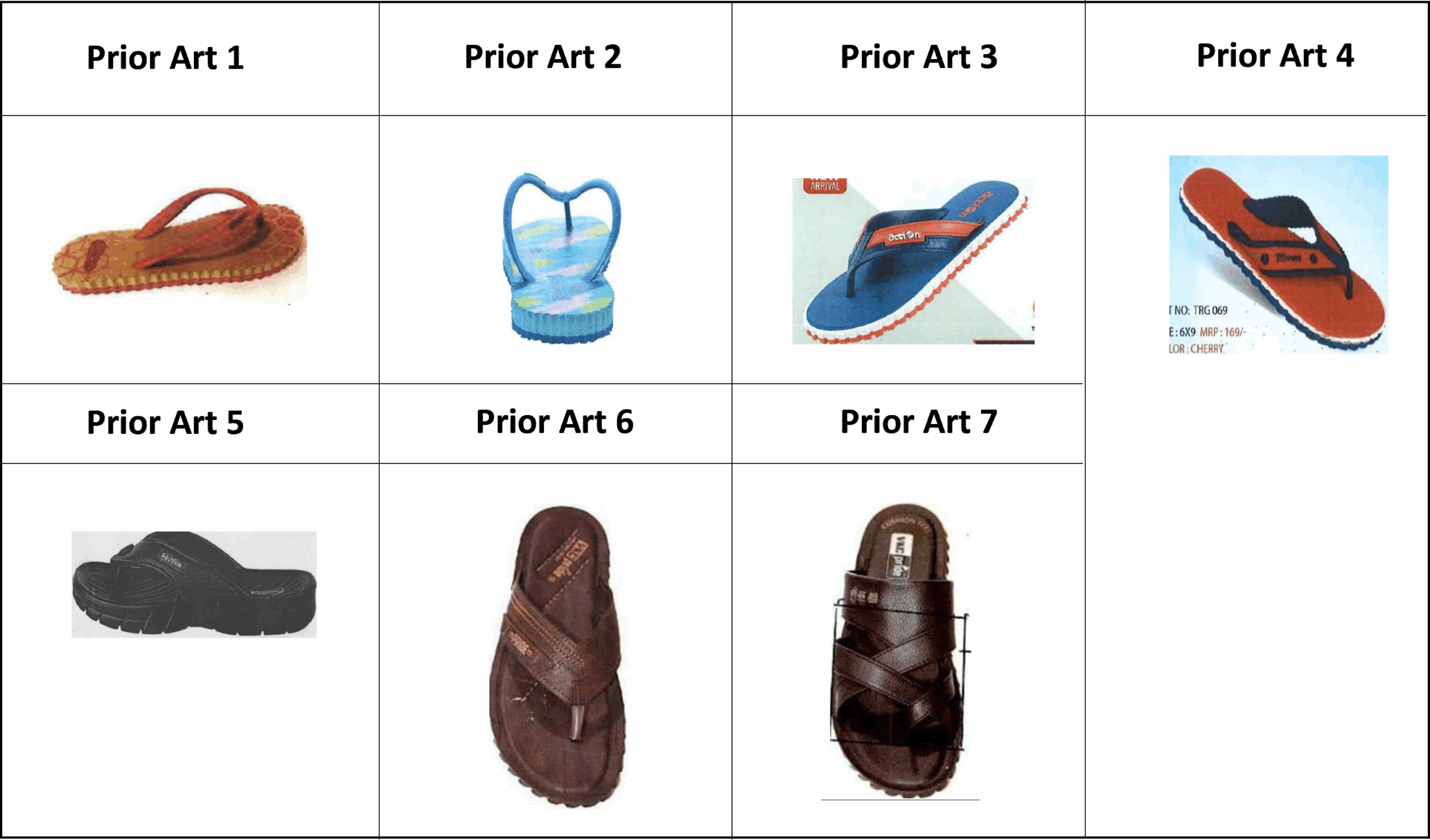
- Aqualite submitted examples of prior art, including products from third parties, to show that similar side ridges were a common design element and not unique to Relaxo.
- Prior Publication
- Aqualite contended that Relaxo’s designs had been published prior to registration, which would invalidate the design registration under Section 4(b) of the Designs Act.
- They argued that the features claimed as novel by Relaxo were already disclosed to the public through earlier products, advertisements, or catalogues, and thus could not be protected as new designs.
- No Monopoly Over Color
- Aqualite emphasized that colour was not part of the registered design and, therefore, Relaxo could not claim infringement based on similarities in colour schemes.
- They argued that the registration certificates only covered the shape, configuration, and surface pattern, not the colour, so any similarities in colour between the products were irrelevant to the question of design infringement.
- Differences in Overall Appearance
- Aqualite asserted that, even if there were similarities, the overall visual impression of their products was different from Relaxo’s registered designs.
- They pointed out differences in the arrangement, number, and structure of the side ridges, as well as other aspects of the slippers’ design, to argue that an informed observer would not consider the two products substantially similar.
- Reliance on Legal Precedents and Prior Art
- Aqualite cited various legal precedents to support their arguments regarding novelty, prior publication, and the scope of design protection.
- They relied on previous judgments to argue that minor or trivial variations in design do not constitute novelty and that the burden of proving novelty lies with the design registrant.
Relaxo’s Contentions:
- The primary novel feature of its registered designs was the presence of vertical side ridges on the slippers. Relaxo argued that the prior art cited by Aqualite did not contain the same arrangement or structure of side ridges as its registered design.
- Aqualite’s products were replicas of Relaxo’s registered designs, constituting design piracy under Section 22(1) of the Designs Act.
- Relaxo argued that by this action they have sought to protect its goodwill and market reputation from dilution due to Aqualite’s alleged copying.
Court’s Analysis of Prior Art and Novelty
- The court examined the prior art cited by Aqualite, including physical samples and photographs.
- It found that the side ridges in Relaxo’s designs were visually distinct from those in the prior art. The prior art ridges had a “saw-like” structure, while Relaxo’s were “crenellation-shaped.”
- The court emphasized that novelty must be assessed from the perspective of an “instructed eye” (someone aware of prior art), not just an average consumer.
- The court concluded that the side ridges in Relaxo’s designs imparted sufficient novelty and aesthetic appeal, making them registrable and not invalid due to prior publication or lack of originality.
On Aesthetic Appeal
- The court rejected Aqualite’s argument that the designs lacked aesthetic appeal, stating that registrability does not require beauty, only distinct visual appeal.
- Even simple or utilitarian designs can be registered if they have a distinct shape, configuration, or pattern.
On the Issue of Colour
The court clarified that Relaxo’s design registrations did not cover color combinations, only the shape, configuration, and surface pattern. Thus, colour similarity was irrelevant to the question of design piracy.
Procedural Fairness
The court acknowledged that Aqualite was not given an opportunity to file a written statement before the interim injunction was granted but allowed Aqualite to rely on documents and prior art submitted before the judgment was reserved.
Conclusion and Dismissal of Appeal
- The court found that Aqualite’s products were identical in shape and configuration to Relaxo’s registered designs.
- The registration of Relaxo’s designs was not, prima facie, liable to cancellation under the Designs Act.
- The interim injunction against Aqualite was upheld, and the appeal was dismissed as devoid of merit.
Our comment
The decision lays down that while assessing ‘prior art’ mere similarity is insufficient and visual distinction matters. For a prior art to invalidate a design, it must be clearly established and comparable in the relevant features. Mere existence of similar features in unrelated products is insufficient.